Introduction
Shipping an AI experiment is easy.
Shipping it to production? That’s where things fall apart.
Teams build impressive demos—models that work, features that impress, prototypes that get buy-in. But when it’s time to integrate those experiments into real systems, progress stalls.
Why?
Because what works in isolation rarely works in production.
The Illusion of Success
Early-stage AI experiments often feel like breakthroughs:
The model performs well on test data
The demo flows smoothly
The output looks convincing
But these successes are often fragile.
They don’t account for:
Real-world edge cases
System constraints
Performance at scale
Integration with existing architecture
What looks “done” is often just the beginning.
Where Teams Go Wrong
1. Treating Experiments as Products
An experiment answers: “Can this work?”
A product must answer: “Can this work reliably, at scale, in context?”
Teams often skip the transition.
They move directly from prototype to production without:
Hardening the system
Defining failure modes
Building observability
2. Ignoring System Context
AI features don’t live in isolation—they exist inside complex systems.
Common mistakes include:
Not aligning with existing APIs
Breaking established patterns
Creating parallel logic paths
Ignoring dependencies
The result is friction, not acceleration.
3. Underestimating Edge Cases
Demos are controlled environments.
Production is not.
Real users introduce:
Unexpected inputs
Ambiguous requests
High variability
Without robust handling, systems degrade quickly.
4. No Feedback Loops
In experiments, feedback is immediate and manual.
In production, you need:
Logging and monitoring
User feedback signals
Performance tracking
Iteration pipelines
Without these, teams are flying blind.
5. Overlooking Operational Complexity
Production systems require more than correctness.
They require:
Reliability
Scalability
Security
Cost control
Ignoring these leads to systems that work—but don’t last.
The Real Gap: Integration
The hardest part isn’t building the model.
It’s integrating it into:
Your codebase
Your workflows
Your infrastructure
This is where most teams struggle—and where most delays happen.
A Better Approach
To move from experiment to production successfully, teams need to shift their mindset.
Think in Systems, Not Features
Ask:
How does this fit into our architecture?
What does it depend on?
What depends on it?
Design for Failure
Assume things will break.
Add fallbacks
Handle errors gracefully
Define safe defaults
Build Observability Early
Don’t wait until something breaks.
Track:
Inputs and outputs
Latency
Error rates
User interactions
Iterate in Production
Shipping isn’t the end—it’s the start of learning.
Roll out gradually
Measure impact
Improve continuously
Where Flames Helps
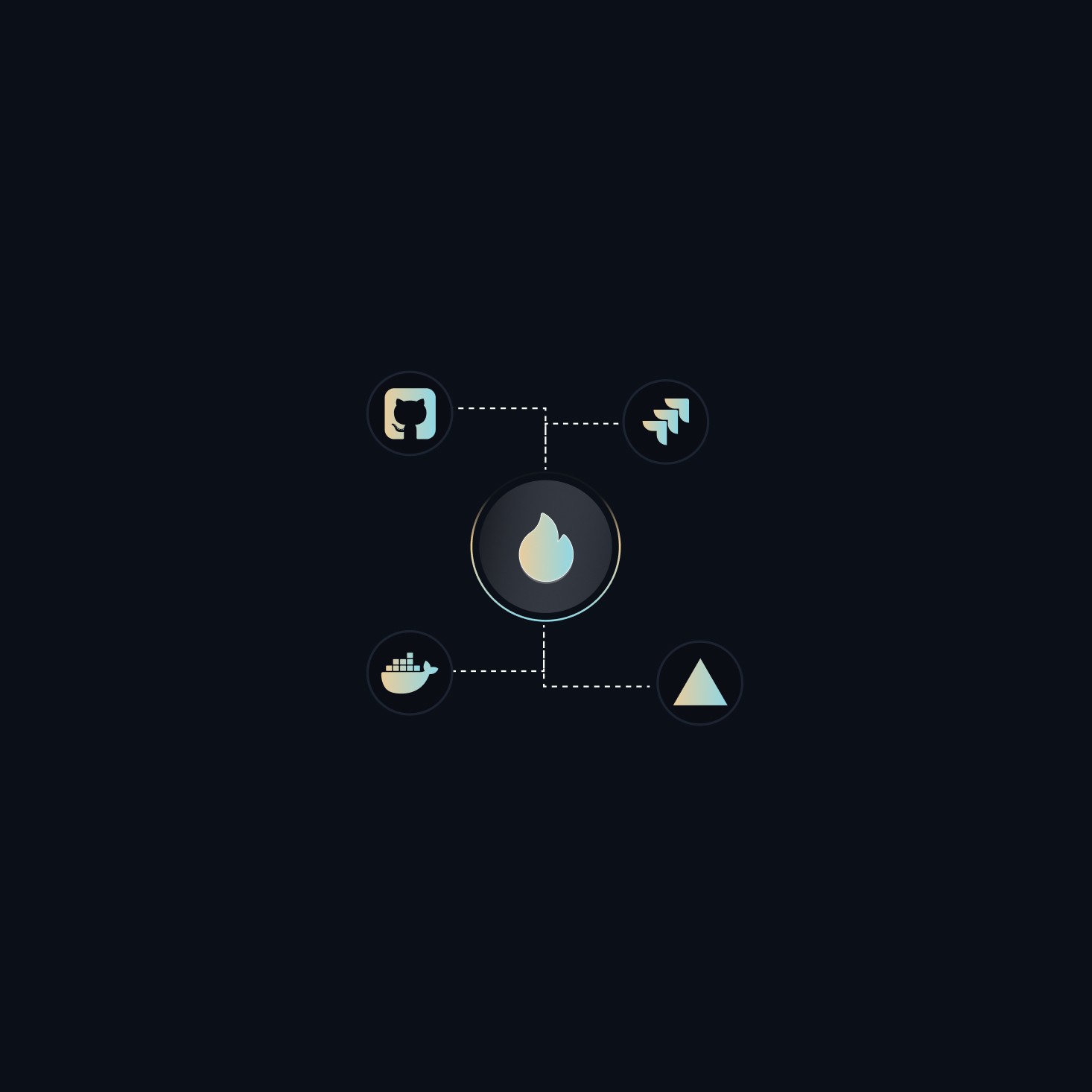
Flames is built for this exact transition—from idea to production-ready system.
Because it understands your entire codebase, Flames helps ensure that what you build:
Fits your architecture
Reuses existing patterns
Integrates cleanly with dependencies
And when things go wrong, Flames helps you diagnose and fix issues in context.
From Prototype to Production—The Right Way
Instead of:
Build → Demo → Ship → Struggle
Adopt:
Build → Integrate → Observe → Iterate → Scale
That shift is what separates experiments from real products.
Final Thoughts
Experiments prove possibility.
Production demands reliability.
Bridging that gap isn’t just about better models—it’s about better systems, better processes, and better integration.
Because in the end, success isn’t defined by what your AI can do.
It’s defined by what your system can consistently deliver.
The real challenge isn’t building something that works.
It’s building something that keeps working.

Written by
Priya Nair
Operations at Flames


Try Now
Your team ships faster starting today.
Join 14,000+ developers who stopped copying from Stack Overflow and started building with Flames.