Introduction
Modern software development isn’t just about writing code—it’s about everything that happens around it.
From CI/CD pipelines to deployments to team communication, developers rely on a growing ecosystem of tools to ship reliably and quickly.
But there’s a problem:
These tools don’t talk to each other in a meaningful way.
Flames is changing that.
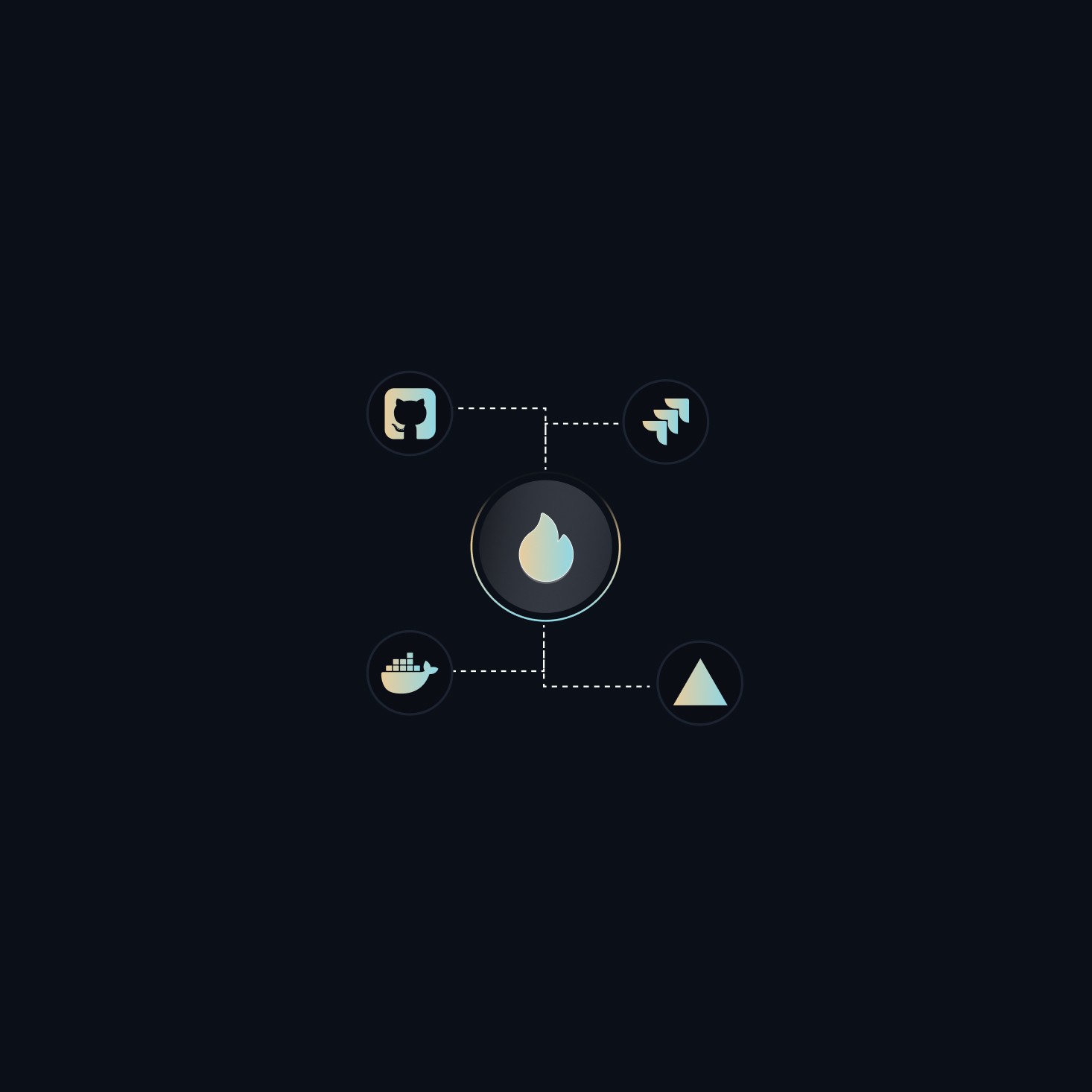
Today, we’re introducing native integrations with GitHub Actions, Vercel, and Slack—bringing your code, workflows, and team into a single, intelligent loop.
The Problem: Fragmented Workflows
A typical development cycle looks like this:
Write code
Push to GitHub
Wait for CI (GitHub Actions)
Deploy via Vercel
Notify team in Slack
Debug issues across all of the above
Each step happens in a different tool. Context gets lost. Feedback is delayed. And developers spend too much time stitching things together.
What We Built
Flames now integrates directly into your development workflow, connecting the tools you already use—while adding context and intelligence on top.
Instead of jumping between platforms, Flames becomes the layer that understands and coordinates everything.
GitHub Actions: Smarter CI/CD
With GitHub Actions integration, Flames doesn’t just observe your pipeline—it understands it.
What You Can Do
Automatically analyze failed builds
Suggest fixes based on your codebase
Identify flaky tests and recurring issues
Generate context-aware patches
No more digging through logs alone—Flames helps you interpret and act.
Vercel: Intelligent Deployments
Deployments shouldn’t feel like a leap of faith.
With Vercel integration, Flames connects your code changes to real deployment outcomes.
Key Benefits
Understand what changed in each deployment
Detect breaking changes before they hit production
Suggest fixes when deployments fail
Track performance regressions tied to code changes
Flames turns deployments into something you can reason about—not just monitor.
Slack: Context Where Your Team Lives
Your team already collaborates in Slack. Now, Flames joins the conversation—with context.
What This Enables
Real-time alerts with meaningful explanations
Summaries of CI failures and deployments
Suggested fixes directly in threads
Faster collaboration between engineers
Instead of pasting logs and guessing, your team gets answers.
The Power of Connected Context
What makes these integrations different isn’t just connectivity—it’s understanding.
Flames connects:
Your codebase
Your pipelines
Your deployments
Your team conversations
And adds a layer of intelligence across all of them.
The Result
Faster debugging
Fewer broken deployments
Better team alignment
Less context switching
A New Development Loop
Before:
Code → CI → Deploy → Debug → Communicate (in silos)
Now with Flames:
Code → Understand → Act → Ship (with context at every step)
Why This Matters
As systems grow more complex, the cost of disconnected tools increases.
Developers don’t just need more automation—they need coordinated intelligence.
Flames brings that by turning your toolchain into a cohesive system, not a collection of parts.
Getting Started
If you’re already using Flames, integrations with GitHub Actions, Vercel, and Slack are available starting today.
Connect your repositories
Link your deployment workflows
Add Flames to your Slack workspace
From there, Flames begins learning—and improving your workflow immediately.
Final Thoughts
The future of development isn’t just faster code generation—it’s smarter systems around that code.
By integrating deeply with the tools you already use, Flames helps you move from reactive workflows to proactive ones.
Because great engineering isn’t just about writing code.
It’s about everything that happens after.
Flames doesn’t just fit into your workflow—it upgrades it.

Written by
Arjun Mehta
Operations at Flames


Try Now
Your team ships faster starting today.
Join 14,000+ developers who stopped copying from Stack Overflow and started building with Flames.